
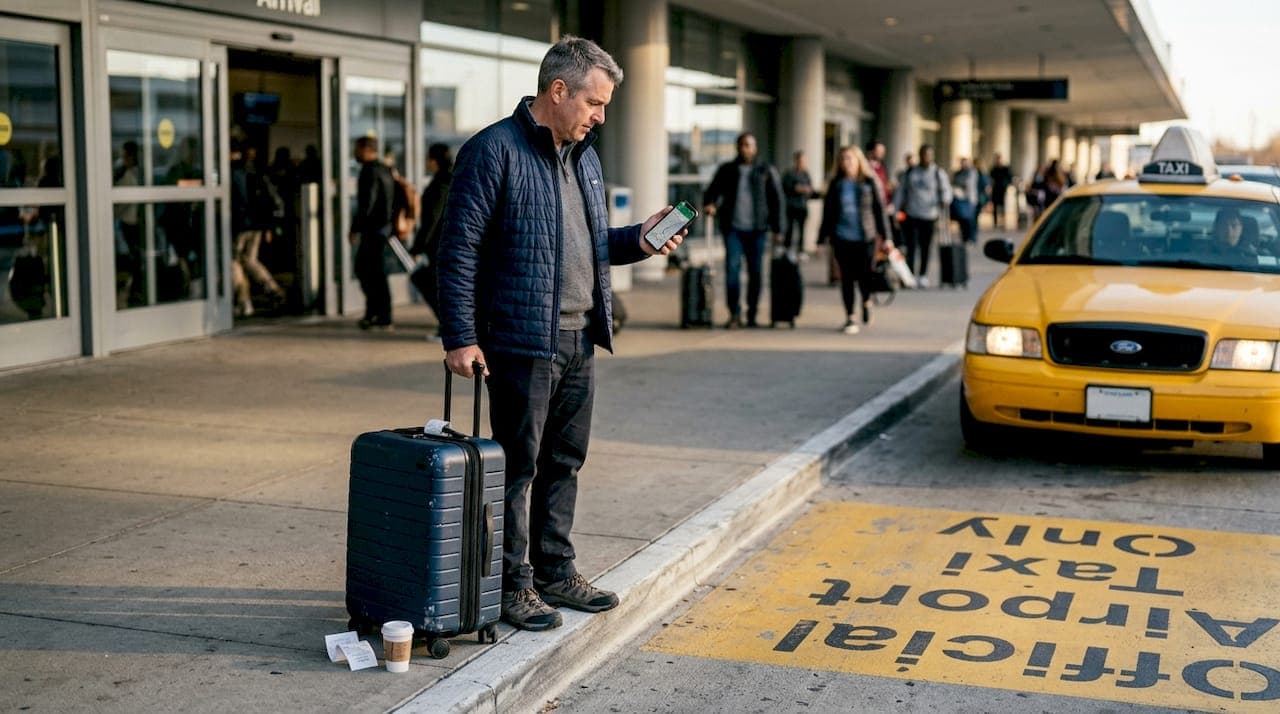
Landing in a new country should feel exciting, not stressful. Yet countless travelers step off planes only to face aggressive taxi drivers, inflated fares, and unlicensed vehicles waiting to exploit their unfamiliarity. Airport taxi scams remain one of the most common travel frustrations worldwide, costing passengers money, time, and peace of mind. This guide arms you with practical strategies to recognize scam tactics, prepare effectively before arrival, and secure safe, reliable airport transfers every time you travel internationally.
Table of Contents
- Key takeaways
- Understanding common airport taxi scams
- Preparing ahead to avoid scams: what you need
- Step-by-step guide to secure a safe airport transfer
- Common mistakes and how to troubleshoot issues
- Enjoy safe and reliable airport transfers with our service
- How to avoid airport taxi scams: common questions
Key Takeaways
| Point | Details |
|---|---|
| Recognize scam signs | Identify aggressive drivers, inflated fares, and unlicensed vehicles that operate outside official taxi systems. |
| Book transfers in advance | Research destination options, compare official licenses and private transfers, and secure confirmed bookings before you travel. |
| Choose licensed services | Opt for licensed or reputable private transfer services that vet drivers and vehicles to reduce safety and fraud risks. |
| Verify driver and vehicle | Confirm driver name, vehicle make and plate, and contact details before departure to avoid detours and impersonation. |
Understanding common airport taxi scams
Airport taxi scams take many forms, but they share a common goal: separating you from your money through deception or intimidation. Recognizing these tactics protects both your wallet and your safety.
The moment you exit baggage claim, scammers spot easy targets. They approach with confident smiles, offering immediate rides without waiting in official taxi queues. These unauthorized drivers operate outside regulated systems, meaning no oversight, no accountability, and no recourse if something goes wrong. Their vehicles lack proper licensing, insurance, or safety inspections.
Price inflation represents the most widespread scam. Drivers quote astronomical fares for standard routes, knowing exhausted travelers often pay without questioning. Rigged meters tick faster than legitimate ones, or drivers claim meters are broken and demand inflated flat rates. Some take unnecessary detours through traffic or longer routes, padding both time and cost.
"The biggest mistake travelers make is assuming every taxi at the airport operates legally. Unlicensed drivers prey on this assumption, offering convenience that comes with serious risks."
Common scam tactics include:
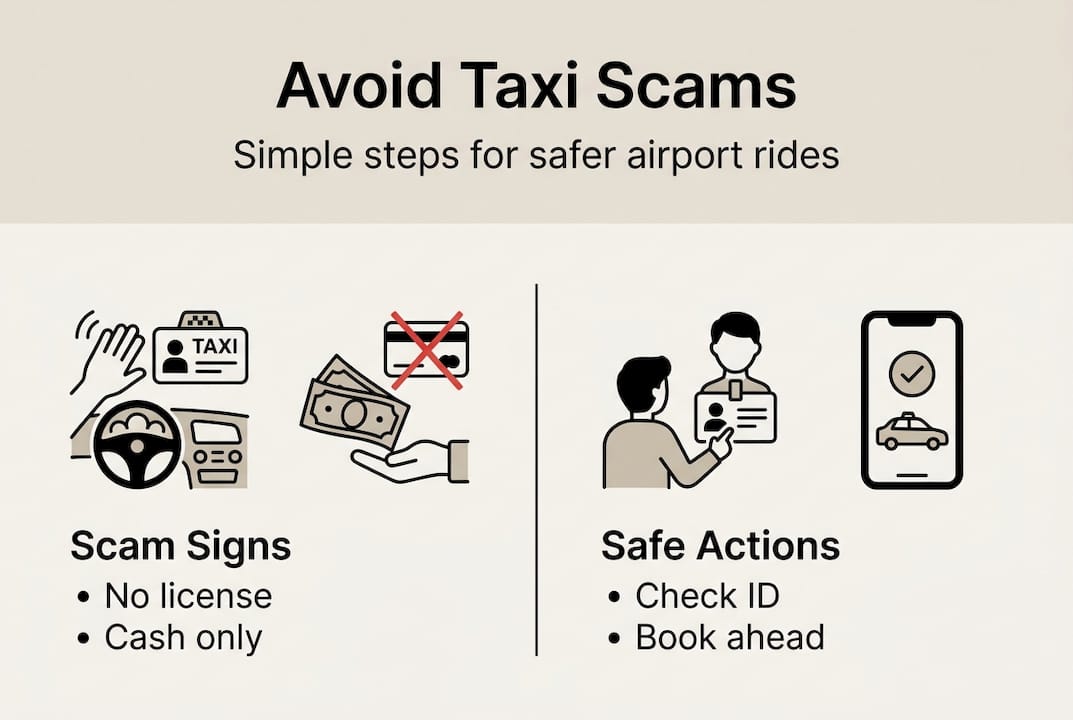
- Demanding full payment upfront before departure, then adding surprise charges at your destination
- Refusing to provide receipts, making it impossible to dispute charges or report fraud
- Claiming your hotel moved or closed, then driving you to a different property that pays them commission
- Insisting only cash payment is accepted, even when card readers are available
- Using aggressive behavior or creating urgency to prevent you from considering alternatives
Beyond financial loss, unlicensed taxis pose genuine safety concerns. You cannot verify driver identity, criminal background checks, or vehicle maintenance standards. If an incident occurs, authorities have no registration to trace. Global private airport transfers through licensed services eliminate these risks entirely by vetting every driver and vehicle before they enter the network.
Preparing ahead to avoid scams: what you need
Successful scam avoidance starts before you board your flight. Preparation removes the vulnerability that scammers exploit when you arrive tired and disoriented in an unfamiliar place.
Research your destination's transportation landscape thoroughly. Identify which companies hold official airport taxi licenses and which private transfer services maintain strong safety records. Read recent traveler reviews on independent platforms, paying attention to comments about pricing transparency and driver professionalism. Understanding typical fare ranges for your specific route prevents you from accepting inflated quotes.
Pro Tip: Screenshot maps showing your route from the airport to your destination. This simple preparation signals to drivers that you know the correct path, deterring detour attempts.
Essential preparation checklist:
- Download and save your transfer booking confirmation with driver contact details
- Exchange enough local currency to cover a legitimate taxi fare if backup options become necessary
- Store emergency contact numbers for local transport authorities and your country's embassy
- Research your destination airport's official taxi stand locations and procedures
- Save offline maps of standard routes to your accommodation
Booking airport transfers in advance with licensed, professional companies significantly reduces scam risks by establishing clear expectations and accountability before you travel.
| Preparation Element | Why It Matters | When to Complete |
|---|---|---|
| Transfer booking confirmation | Provides driver details and fare guarantee | 24-48 hours before flight |
| Local currency cash | Backup option if cards fail | Before departure or at airport ATM |
| Route knowledge | Prevents detour scams | Day before travel |
| Emergency contacts | Enables quick help if problems arise | Before departure |
| Official taxi stand location | Directs you to legitimate services | During flight or upon landing |
Having these elements ready transforms you from a vulnerable target into an informed traveler who scammers recognize as too prepared to exploit easily.
Step-by-step guide to secure a safe airport transfer
Executing a safe airport transfer requires following specific steps that build layers of protection against scams and unsafe practices.
-
Confirm your booking details before leaving home. Print physical copies or ensure digital confirmations remain accessible offline. Include driver name, phone number, vehicle description, license plate, and agreed fare. This documentation becomes your verification tool upon arrival.
-
Navigate directly to official meeting points or taxi stands after clearing customs. Ignore anyone approaching you inside the terminal offering rides. Legitimate drivers wait at designated areas, not inside baggage claim. If you booked a private transfer, they hold a sign with your name at the specified meeting location.
-
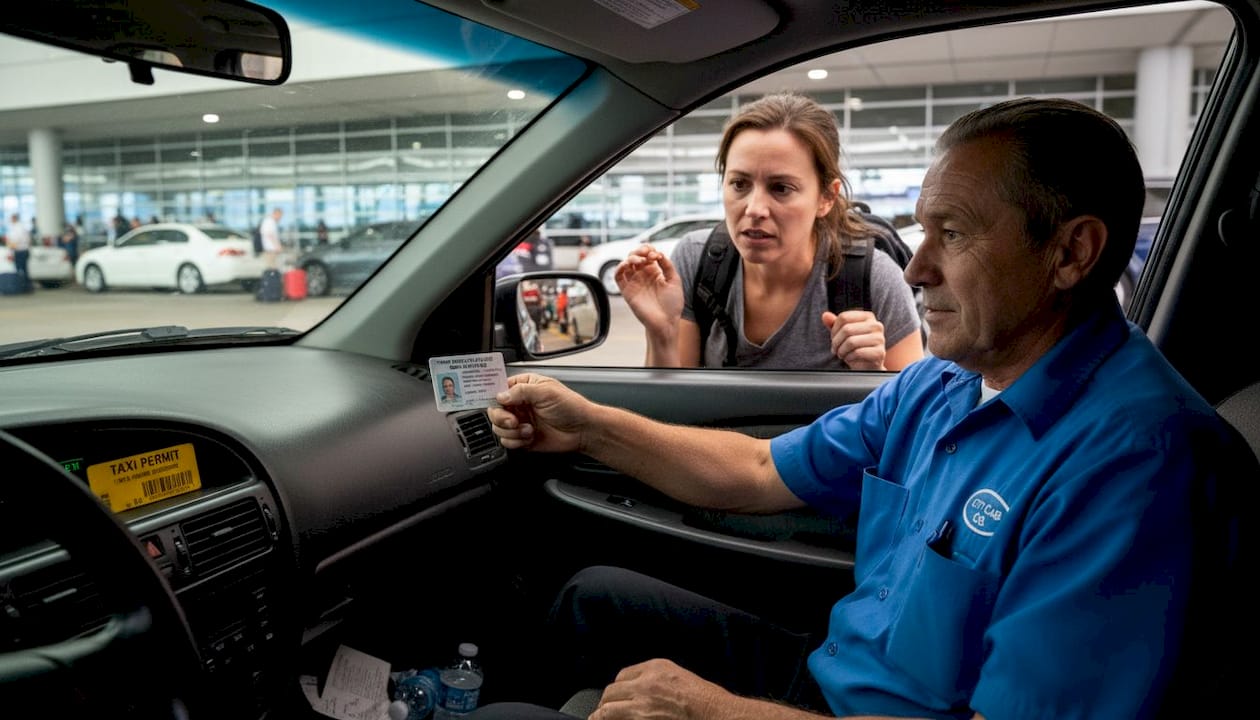
Verify every detail before entering any vehicle. Check the license plate matches your booking confirmation exactly. Ask the driver to show official identification and confirm your name and destination without you stating it first. Legitimate drivers expect this verification and cooperate willingly. If anything feels wrong, walk away immediately.
-
Establish the route and fare explicitly before departure. For metered taxis, confirm the meter is running and starts at the base fare. For fixed-price transfers, reconfirm the total amount and what it includes. State your destination clearly and mention you know the standard route, referencing your saved map if needed.
-
Pay using the safest available method and always request a receipt. Credit cards provide transaction records and dispute options. If paying cash, have exact change ready to avoid claims they cannot provide change. Receipts document the transaction and enable reporting if problems occur.
Pro Tip: Take a photo of the vehicle license plate and driver ID before entering. This creates a safety record and signals you are taking security seriously.
Licensed airport transfer services consistently outperform traditional taxis in safety and price transparency because they operate under strict platform standards with driver ratings and guaranteed pricing.
| Service Type | Price Transparency | Safety Verification | Booking Flexibility | Average Cost Difference |
|---|---|---|---|---|
| Pre-booked private transfer | Fixed upfront price | Full driver and vehicle vetting | Book days in advance | Baseline |
| Official airport taxi | Metered or posted rates | Licensed but minimal vetting | Immediate availability | 10-20% higher |
| Unlicensed taxi | Negotiated, often inflated | No verification | Immediate but risky | 50-200% higher |
This comparison shows why advance booking through established platforms delivers superior value alongside dramatically better safety standards.
Common mistakes and how to troubleshoot issues
Even prepared travelers make errors that create scam opportunities. Recognizing these mistakes helps you avoid them and respond effectively if problems arise.
The most dangerous mistake is accepting the first taxi offer from someone who approaches you directly. These individuals specifically target travelers who appear uncertain or rushed. They exploit your desire for quick solutions, knowing you are unlikely to verify credentials when someone offers immediate help. Always proceed to official taxi stands or pre-arranged meeting points, regardless of how convenient an unsolicited offer seems.
Another critical error involves failing to establish fare agreements before departure. Some travelers assume airport taxis operate like rideshare apps with automatic fair pricing. This assumption leads to shock when drivers demand multiples of reasonable rates upon arrival. Metered taxis should display official rate cards. If a driver refuses to show rates or claims the meter is broken, exit immediately and find another option.
"Travelers who skip verification steps because they feel awkward or rushed account for the majority of scam victims. Your safety and money matter more than avoiding brief discomfort."
Frequent mistakes to avoid:
- Sharing too much personal information with drivers, including hotel room numbers or travel plans
- Allowing drivers to handle your luggage before confirming the vehicle and fare
- Getting into vehicles where other passengers are already present unless you booked a shared shuttle
- Ignoring instincts when something feels wrong, staying in situations out of politeness
- Failing to keep your phone charged and accessible for navigation verification and emergency calls
If you suspect a scam while in transit, stay calm but assertive. Use your phone to track your location against your saved route. If the driver takes an obvious detour, question it immediately and insist on the correct path. Many travelers fall victim by speeding into taxis without verifying credentials or fare prices, then feeling trapped once the journey begins.
When serious problems occur, document everything possible. Note the vehicle license plate, driver appearance, and exact circumstances. Contact local transport authorities immediately to report the incident. Most airports maintain dedicated offices for taxi complaints. File reports even if you cannot recover your money, as documentation helps protect future travelers and can support broader enforcement efforts against repeat offenders.
Enjoy safe and reliable airport transfers with our service
After understanding the risks and complexities of airport taxi scams, the solution becomes clear: eliminate uncertainty entirely by booking verified, professional transfers before you travel.
Our platform connects you with licensed drivers at major airports worldwide, guaranteeing fixed upfront prices that never change regardless of traffic or route variations. No negotiations, no surprise charges, no wondering if you are being scammed. You see the total cost before booking and pay that exact amount.
Every driver undergoes thorough background checks and vehicle inspections before joining our network. You receive their name, photo, phone number, and vehicle details in advance, making verification effortless upon arrival. Real traveler reviews ensure accountability, and our support team remains available throughout your journey if any issues arise.
Whether you need a global private airport transfer for business travel, a Dubai airport transfer for vacation, or a Chicago airport transfer for a family trip, professional pre-arranged service transforms airport arrival from a stressful vulnerability into a smooth, predictable experience. Your driver waits at the designated meeting point, helps with luggage, and delivers you safely to your destination while you relax after your flight.
How to avoid airport taxi scams: common questions
What are the most common airport taxi scams?
The most prevalent scams include price gouging through inflated fares or rigged meters, unlicensed drivers offering rides without proper credentials, unnecessary detours to increase metered charges, and demanding cash payment upfront then adding surprise fees at your destination. Scammers also claim hotels have closed to redirect you to properties paying them commission.
How do I verify a taxi is licensed at the airport?
Check for official taxi license numbers displayed prominently on the vehicle exterior and inside the cabin. Legitimate taxis have company names, phone numbers, and rate cards visible. Ask to see the driver's official taxi permit with photo ID. Licensed taxis wait at designated stands, not inside terminals approaching travelers directly.
Is it safer to book transfers in advance?
Yes, pre-booking dramatically improves safety and eliminates price uncertainty. You receive driver and vehicle details before arrival, verify credentials easily, and benefit from guaranteed fixed pricing. Advanced bookings create accountability through platform oversight and customer reviews, deterring scam attempts that target spontaneous on-the-spot transactions.
What payment methods reduce scam risks?
Credit cards provide the strongest protection through transaction records and dispute capabilities. Many legitimate services accept contactless payments or digital wallets. If paying cash, use exact change to prevent false claims about lacking change. Always request and keep receipts regardless of payment method to document the transaction.
What to do if I am scammed at the airport?
Document everything immediately including vehicle license plate, driver description, and transaction details. Contact airport security or the ground transportation office to file a formal complaint. Report the incident to local transport authorities and your credit card company if applicable. Share your experience through reviews to warn other travelers and support enforcement efforts against repeat offenders.